
Watch Water Resistance Testing in St. Louis
Protect your watch from moisture damage with professional pressure testing. We use both dry and wet pressure testers to verify your watch’s water resistance at its rated depth — and repair any failed seals on the spot.
Our Testing Process
A thorough, multi-step approach that identifies leaks without ever submerging your watch in water.
Initial Inspection
Visual check of the case, crown, crystal, and pushers for obvious damage or worn seals that could compromise water resistance.
Pressure Test
We use dry and wet pressure testers to check water resistance at your watch’s rated depth — without opening the case.
Seal Replacement
If the test reveals a leak, we replace gaskets and seals with brand-specific components, then re-test to confirm the repair.
Final Verification
We confirm timekeeping accuracy, verify the restored water resistance, and share care tips to maintain the seal long-term.
Why Water Resistance Testing Matters
Water damage is one of the most expensive watch repairs — and one of the most preventable.
Prevent Water Damage
Seals and gaskets degrade over time from temperature changes, aging, and daily wear. Regular testing catches failures before water reaches the movement.
Preserve Watch Integrity
Even small amounts of moisture inside a watch case can corrode the movement, rust hands and dial markers, and fog the crystal from the inside.
Maintain Warranty Coverage
Many manufacturers require periodic water resistance checks to keep the warranty valid — especially for dive watches and sport models.
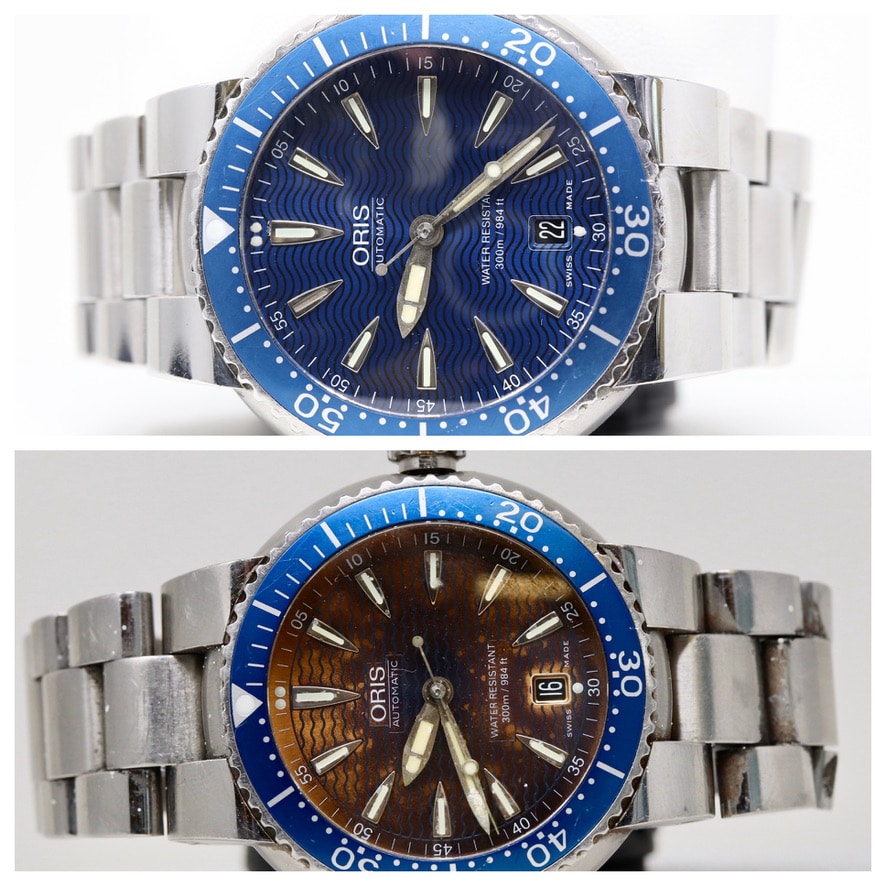
An Oris dive watch rated to 300 meters — with degraded seals, even a watch designed for deep water can suffer catastrophic dial damage from moisture intrusion.
How We Test: Dry & Wet Pressure Methods
We use two professional testing methods to verify your watch’s water resistance without risking water contact with the movement.
Dry pressure testing uses a compressor-connected chamber that applies air pressure to the watch at various depths. This method detects leaks without any water touching the watch — ideal for initial testing and quick verification.
Wet pressure testing uses a specialized machine with a two-step process: first a vacuum test, then positive pressure inside an enclosed water chamber. This more rigorous method confirms water resistance under real-world conditions and is used to verify repairs.
Both methods test at your watch’s specific rated depth — whether it’s 30 meters for everyday splash resistance or 200+ meters for dive watches.

What Happens When a Watch Fails the Test
If pressure testing reveals a leak, our watchmakers begin the restoration process immediately. First, they open the case and inspect all seals to determine exactly where the water resistance was compromised.
In most cases, the fix involves replacing degraded gaskets with high-quality, brand-specific replacements sized for optimal fit and maximum water resistance. If the crown, crystal, or caseback sealing surfaces are damaged, we address those issues as well.
Once repairs are complete, we run a second round of pressure testing to verify the restoration was successful. Before returning your watch, our technician explains how to maintain water resistance going forward — including proper crown handling, when to avoid water exposure, and the recommended testing schedule.
Get a Free Estimate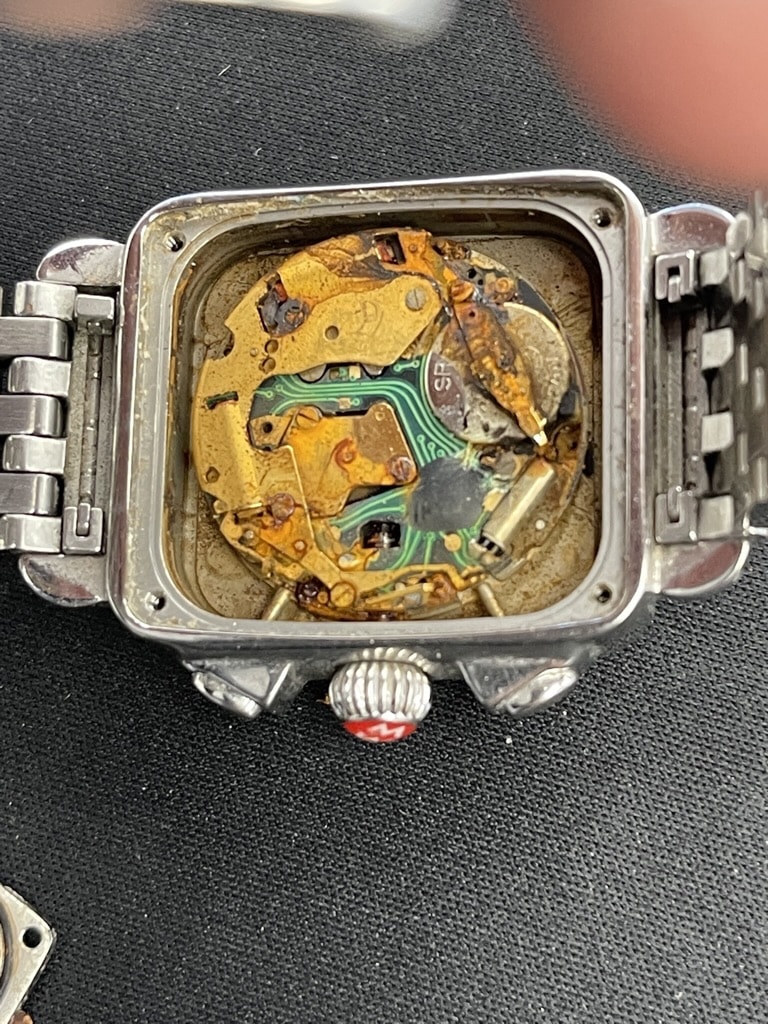
When Should You Get Your Watch Tested?
Annually — Gaskets degrade over time even without visible damage. Yearly testing is the best prevention.
After any repair — Crystal replacement, crown/stem repair, caseback opening, or battery change can affect the seal.
Before water activities — Swimming, snorkeling, diving, or any planned water exposure warrants a check.
If you see condensation — Fog or moisture under the crystal means water has already entered. Bring it in immediately.
After impacts or drops — A hard knock can dislodge seals or crack the crystal, compromising the case.
After extreme temperature changes — Hot tubs, saunas, or sudden cold exposure can cause gaskets to expand and contract, breaking the seal.
Brands We Test & Service
We test and restore water resistance for all watch brands — from everyday timepieces to luxury dive watches.
✓ = Authorized service center | Don’t see your brand? We likely service it — ask us.